
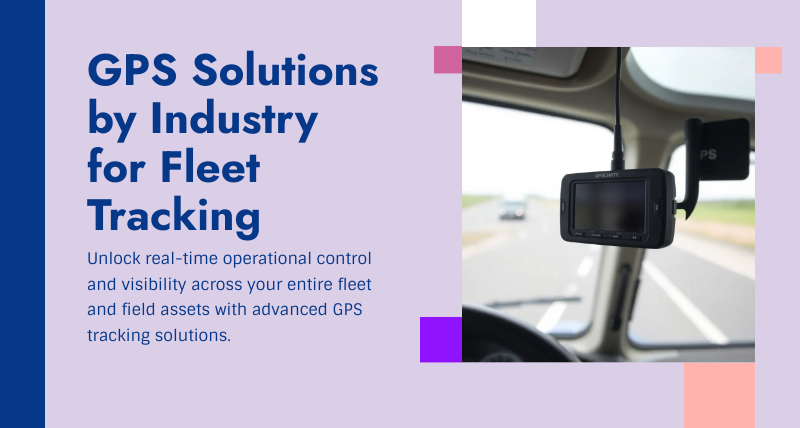
GPS tracking systems provide real-time operational control across fleets and field assets
GPS tracking systems enable organizations to monitor vehicle location, driver behavior, and asset utilization in real time, creating a centralized layer of operational visibility. This visibility transforms fleet management from reactive oversight into structured, data-driven control.
When GPS tracking is paired with video telematics—such as the systems offered by SafeDrive Dashcam—the value expands beyond location tracking. Managers gain the ability to validate events, understand driver context, and resolve disputes with clear visual evidence.
At a functional level, GPS systems support:
- Live vehicle tracking and route visibility
- Historical trip data and route replay
- Driver behavior monitoring (speeding, harsh braking, idling)
- Geofencing and automated alerts
- Asset tracking for non-powered equipment
This combination of capabilities allows businesses to reduce inefficiencies, improve safety outcomes, and maintain accountability across distributed operations.
Tailored GPS solutions align with the operational realities of each industry
GPS tracking systems must be configured based on how a business operates, not simply installed as a generic solution. Each industry has unique workflows, risk profiles, and performance metrics that determine how tracking data should be collected and used.
A standardized setup often fails to deliver meaningful value because it does not reflect real operational priorities. Customization ensures that alerts, reporting, and hardware configurations match the environment in which vehicles and assets operate.
Key areas of customization include:
- Operational focus: Delivery speed, safety compliance, or asset utilization
- Data granularity: Real-time monitoring versus aggregated reporting
- Hardware configuration: Forward-facing cameras, dual-facing systems, or multi-camera setups
- Alert thresholds: Industry-specific triggers for safety or performance
- Integration needs: Dispatch systems, maintenance tracking, or compliance platforms
A properly tailored GPS solution becomes embedded into daily operations rather than functioning as a passive tracking tool.
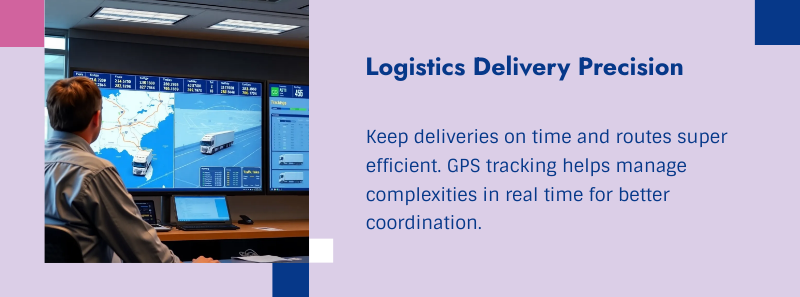
Transportation and logistics fleets rely on GPS tracking to maintain delivery precision and route efficiency
Transportation and logistics operations depend on precise coordination, where even minor inefficiencies can scale into significant cost and service issues. GPS tracking provides the infrastructure needed to manage these complexities in real time.
Route optimization becomes more effective when combined with live tracking, allowing dispatchers to adjust routes dynamically based on traffic conditions, delays, or unexpected disruptions. Delivery verification is strengthened through timestamped location data, reducing disputes and improving customer confidence.
Operational benefits include:
- Reduced fuel consumption through optimized routing
- Improved on-time delivery rates
- Real-time shipment visibility for dispatch teams
- Enhanced accountability for drivers and routes
- Faster response to delays or route deviations
When integrated with dashcam systems, logistics fleets also gain incident verification capabilities, which are critical for liability management in high-volume transportation environments.
Construction and heavy equipment operations require GPS tracking for asset security and utilization control
Construction environments present a fundamentally different challenge, where both vehicles and heavy equipment must be tracked across multiple job sites. GPS tracking ensures that assets are accounted for, properly utilized, and protected against loss or theft.
Unlike traditional fleets, construction operations often involve non-powered equipment that cannot be monitored through standard vehicle tracking systems. GPS asset trackers fill this gap by providing location visibility for trailers, machinery, and high-value tools.
Critical use cases include:
- Theft prevention through real-time location tracking
- Monitoring equipment usage across job sites
- Preventing unauthorized movement outside designated areas
- Improving allocation of assets between projects
- Reducing idle or underutilized equipment
The addition of dashcam systems on service vehicles operating within construction environments further enhances safety oversight, particularly in high-risk zones with complex movement patterns.
Field service businesses use GPS tracking to optimize dispatching and customer response times
Field service operations depend on speed, accuracy, and coordination. GPS tracking enables dispatch teams to assign jobs based on proximity, availability, and real-time traffic conditions, significantly improving response efficiency.
This level of visibility allows businesses to move beyond static scheduling models and adopt dynamic dispatching strategies that respond to changing conditions throughout the day.
Key improvements include:
- Faster job assignment based on real-time location
- Reduced travel time between service calls
- Improved first-time fix rates through better planning
- Increased technician productivity
- More accurate estimated arrival times for customers
When paired with dashcams, service organizations also gain visibility into on-site conditions and interactions, supporting quality assurance and dispute resolution when necessary.
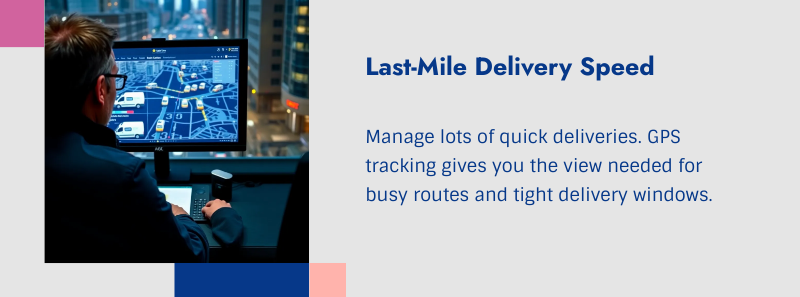
Delivery and last-mile fleets depend on GPS tracking to manage high-volume, time-sensitive operations
Last-mile delivery operations operate under intense time pressure and narrow delivery windows. GPS tracking provides the visibility required to manage high stop density and ensure consistent performance across routes.
The ability to monitor multiple vehicles simultaneously allows operations teams to identify delays, reroute drivers, and maintain delivery schedules even under changing conditions.
Operational advantages include:
- Real-time tracking of delivery progress
- Improved route density and stop sequencing
- Reduction in failed or missed deliveries
- Enhanced customer communication with accurate ETAs
- Better oversight of driver performance
Dashcam integration is particularly valuable in last-mile environments, where frequent stops and dense urban driving increase the likelihood of incidents and disputes.
Utility and infrastructure fleets use GPS tracking to manage distributed assets and ensure compliance
Utility and infrastructure organizations operate across large geographic areas, often managing both vehicles and stationary assets. GPS tracking supports this complexity by providing centralized visibility into operations that are otherwise difficult to monitor.
These fleets often face strict regulatory and safety requirements, making accurate tracking and reporting essential.
Core capabilities include:
- Monitoring vehicle movement across service territories
- Tracking response times for service calls
- Ensuring compliance with operational standards
- Managing crews across multiple locations
- Maintaining accountability for critical infrastructure assets
When combined with dashcam systems, utility fleets gain additional oversight into field conditions, supporting both safety initiatives and operational transparency.
Food and beverage fleets require GPS tracking to maintain timing and operational consistency
Food and beverage distribution relies heavily on timing, route consistency, and operational reliability. GPS tracking ensures that deliveries are completed within required timeframes while maintaining efficiency across routes.
These operations often involve recurring delivery schedules, making route optimization and consistency critical to maintaining service standards.
Key benefits include:
- Improved route adherence for scheduled deliveries
- Reduced delivery delays through real-time adjustments
- Enhanced coordination between drivers and dispatch
- Better tracking of delivery performance over time
- Increased operational predictability
Dashcam systems add an additional layer of oversight, particularly in urban delivery environments where congestion and frequent stops increase operational risk.
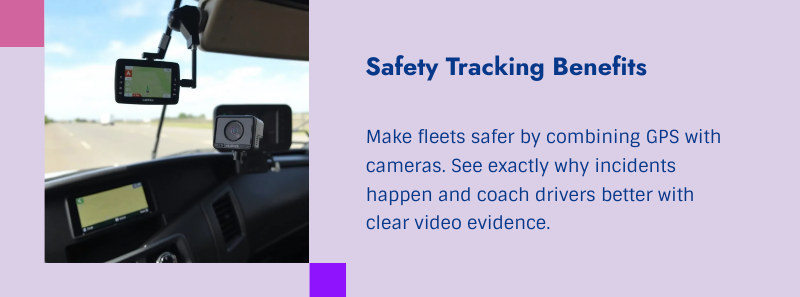
Safety-focused fleets benefit from combining GPS tracking with video telematics
GPS tracking alone provides location and movement data, but it does not fully capture the context behind driver behavior or incidents. Video telematics addresses this gap by pairing GPS data with visual evidence.
This combination allows organizations to understand not just where something happened, but why it happened.
Integrated systems provide:
- Real-time alerts for risky driving behavior
- Visual verification of incidents and near misses
- Improved driver coaching based on actual footage
- Faster resolution of liability claims
- Reduced exposure to fraudulent claims
SafeDrive Dashcam systems are designed to unify GPS tracking and video intelligence, creating a single platform that supports both operational efficiency and safety management.
Choosing the right GPS solution depends on operational complexity, risk exposure, and scalability needs
Selecting a GPS tracking system requires a clear understanding of how the fleet operates and what outcomes the organization needs to achieve. The right solution aligns with both current requirements and future growth.
Key evaluation criteria include:
| Evaluation Area | What to Consider |
| Fleet Size | Scalability and ability to manage growth |
| Industry Requirements | Compliance, safety, and operational needs |
| Hardware Configuration | Camera setups, sensors, and asset tracking |
| Data Visibility | Real-time tracking vs. reporting depth |
| Integration | Compatibility with existing systems |
| Safety Features | Driver monitoring and incident detection |
A system that is too basic will fail to deliver meaningful insights, while an overly complex system may create unnecessary operational friction. The goal is to match capability with actual business needs.
Custom GPS configurations enable measurable improvements in efficiency, safety, and cost control
When properly implemented, GPS tracking systems produce measurable improvements across multiple operational areas. These improvements are not theoretical—they directly impact cost structure, performance, and risk exposure.
Common outcomes include:
- Lower fuel costs through optimized routing
- Reduced accident rates through driver monitoring
- Improved asset utilization and reduced idle time
- Faster response times and improved service levels
- Enhanced accountability across teams
The addition of dashcam technology amplifies these outcomes by providing the context needed to act on data effectively.
Frequently Asked Questions – GPS Solutions for Fleet Tracking
What industries benefit most from GPS tracking solutions?
Industries with mobile operations, such as transportation, construction, field service, and delivery, benefit the most due to their reliance on vehicle coordination and asset visibility.
How does GPS tracking improve fleet efficiency?
GPS tracking improves efficiency by optimizing routes, reducing idle time, and enabling real-time decision-making based on live data.
What is the difference between GPS tracking and telematics?
GPS tracking focuses on location data, while telematics includes additional insights such as driver behavior, vehicle diagnostics, and performance metrics.
Why combine GPS tracking with dashcams?
Combining GPS tracking with dashcams provides both data and visual context, allowing organizations to understand and verify events more accurately.
Can GPS tracking help reduce insurance costs?
Yes, improved safety monitoring and incident documentation can reduce risk exposure, which may lead to lower insurance premiums over time.
Is GPS tracking suitable for small fleets?
GPS tracking is scalable and can provide value to fleets of any size, particularly by improving visibility and operational control.
How long does it take to implement a GPS tracking system?
Implementation timelines vary, but most systems can be deployed quickly depending on fleet size and hardware requirements.