
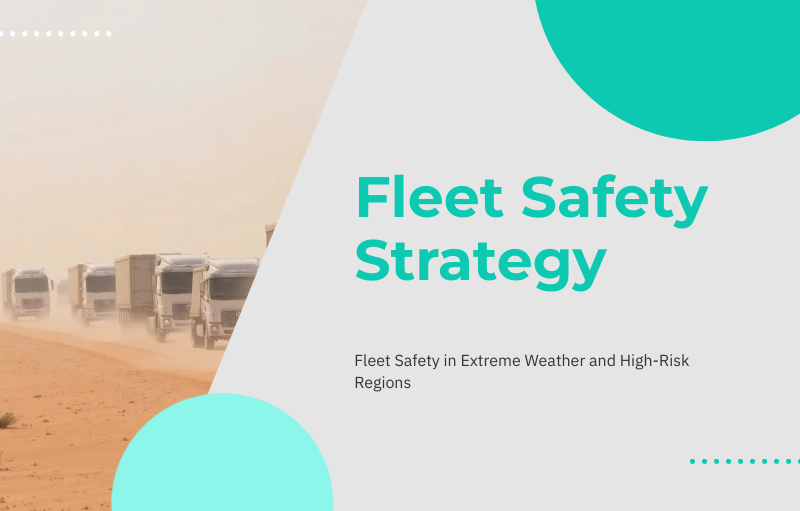
What fleet safety in extreme weather and high-risk regions actually means
Fleet safety in extreme weather and high-risk regions refers to the coordinated practices, technologies, and operational decisions used to reduce accidents, downtime, and liability when vehicles operate in hazardous environmental or geographic conditions. These conditions include snow, ice, hurricanes, flooding, wildfires, desert heat, mountainous terrain, and regions with unstable road infrastructure.
Risk exposure increases when weather variability, poor visibility, degraded road surfaces, and driver fatigue converge. Fleets that operate across large geographic footprints face additional complexity because hazards change rapidly by region and season.
Effective safety management in these environments depends on anticipating conditions, adapting routes and schedules, equipping vehicles appropriately, and maintaining real-time visibility into operations.
Why severe weather conditions change the risk profile of fleet operations
Severe weather alters both vehicle performance and driver decision-making, which increases the probability of incidents even when drivers follow normal procedures. Reduced traction, extended braking distances, and impaired visibility fundamentally change safe driving thresholds.
Operational risk increases in several specific ways:
- Stopping distances increase significantly on wet, icy, or gravel surfaces
- Tire performance declines when temperatures fall or pavement temperatures rise
- Driver reaction time decreases in heavy rain, fog, or blowing snow
- Equipment failure becomes more likely under temperature extremes
- Congestion and emergency road closures disrupt planned routes
Weather also affects infrastructure reliability. Flooding damages roads, wind events scatter debris, and extreme heat can deform pavement or overheat engines.
Operational impact of geographic high-risk regions on fleet safety
High-risk regions introduce persistent hazards that remain present even in clear weather conditions. Mountain passes, coastal highways, desert corridors, and remote industrial routes each present unique safety challenges.
The most common geographic risk factors include:
- Narrow or winding roadways with limited shoulder space
- Steep grades that stress braking systems and drivetrains
- Limited lighting or reflective markers in rural areas
- Sparse emergency services and long response times
- Unpredictable road surfaces such as gravel, sand, or loose rock
Drivers operating in these environments must maintain higher situational awareness and greater following distances. Equipment reliability and communication systems become critical when roadside support is not immediately available.
What determines the effectiveness of a fleet safety strategy in hazardous environments
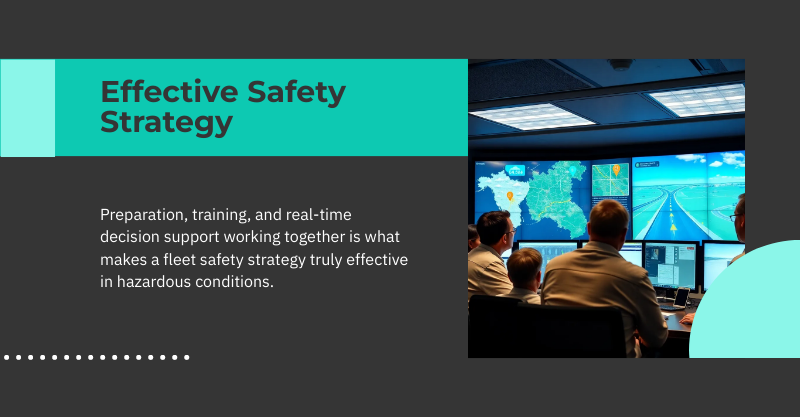
A fleet safety strategy in hazardous environments succeeds when preparation, training, and real-time decision support work together rather than independently. Policies alone do not reduce incidents unless drivers and dispatch teams have actionable information.
The most effective strategies share several characteristics:
- Route planning that accounts for seasonal and regional hazards
- Continuous monitoring of weather and road conditions
- Driver training tailored to specific operating environments
- Preventive maintenance schedules adjusted for climate stress
- Communication protocols for rerouting and emergency response
Consistency across these elements ensures that safety decisions are predictable and enforceable across the fleet.
Preventive vehicle preparation that reduces breakdown and accident risk
Preventive preparation reduces mechanical failures and improves vehicle control under extreme conditions. Vehicles exposed to temperature swings, moisture, and heavy loads experience accelerated wear on key components.
The most critical preparation areas include:
- Tire selection matched to seasonal and regional conditions
- Brake inspection and adjustment before winter or mountain operations
- Cooling system checks before high-temperature deployments
- Battery and electrical system testing in cold climates
- Windshield wipers, defrosters, and lighting maintenance
Preparation schedules should align with operating regions rather than fixed calendar intervals. Vehicles moving between climates may require inspection cycles based on mileage in hazardous conditions rather than total fleet mileage.
Driver training requirements that become essential in hazardous operating zones
Driver training becomes essential in hazardous operating zones because instinctive driving habits developed in normal conditions often become unsafe in extreme environments. Training must emphasize anticipation rather than reaction.
Effective training programs typically cover:
- Controlled braking and skid recovery techniques
- Safe descending procedures on steep grades
- Hazard recognition in fog, dust, or heavy precipitation
- Fatigue management during long or slow routes
- Emergency communication and reporting protocols
Practical simulation and ride-along evaluations improve retention more effectively than classroom instruction alone. Drivers who practice corrective maneuvers develop faster responses during real incidents.
Route planning practices that lower exposure to extreme conditions
Route planning reduces risk by avoiding predictable hazards and scheduling travel windows that minimize exposure. Dispatch teams play a critical role in balancing efficiency with safety margins.
Important route planning considerations include:
- Seasonal weather patterns and historical storm corridors
- Elevation changes and mountain pass restrictions
- Flood-prone road segments and river crossings
- Areas with frequent high-wind advisories
- Construction zones or deteriorated infrastructure
Planning tools and historical route data allow fleets to identify patterns of recurring incidents and adjust routes before problems escalate.
Real-time monitoring and telematics as a foundation for risk awareness
Real-time monitoring provides dispatch teams and fleet managers with immediate visibility into vehicle location, driving behavior, and environmental conditions. Timely information allows faster intervention when hazards develop.
Modern fleet monitoring systems commonly provide:
- GPS tracking and geofencing alerts
- Speed and harsh braking detection
- Engine diagnostics and fault reporting
- Idle time and fuel consumption metrics
- Location-based weather alerts
Access to real-time data enables fleets to reroute vehicles, pause operations, or issue driver alerts before conditions deteriorate further.
Communication protocols that prevent escalation during emergencies
Clear communication protocols prevent minor incidents from becoming operational crises. Drivers must know exactly how to report hazards and receive instructions during rapidly changing conditions.
Effective communication frameworks include:
- Standardized incident reporting procedures
- Dedicated emergency contact channels
- Predefined escalation paths for dispatch teams
- Backup communication methods when cellular service fails
- Scheduled check-ins for vehicles operating in remote areas
Communication discipline ensures that every incident triggers a predictable response rather than improvised decision-making.
Equipment and technology that improve visibility and situational awareness
Visibility and situational awareness technologies help drivers and managers understand what is happening on the road in real time. These tools are particularly valuable in poor weather or isolated locations where conditions change rapidly.
Technologies that strengthen situational awareness include:
- Forward-facing cameras that document road conditions
- Cabin cameras that monitor driver attentiveness
- Proximity sensors and collision warnings
- Tire pressure monitoring systems
- Lane departure alerts
Documentation tools also support incident review, insurance claims, and training programs by providing objective records of events.
Seasonal hazards that fleets must anticipate throughout the year
Seasonal changes create predictable patterns of risk that fleets can prepare for in advance. Planning calendars around seasonal hazards improves readiness and reduces last-minute disruptions.
The table below outlines common seasonal risks and operational responses:
| Season | Primary Hazards | Operational Focus |
| Winter | Ice, snow, reduced daylight | Tire selection, brake inspections, route adjustments |
| Spring | Flooding, heavy rain | Route monitoring, drainage awareness |
| Summer | Heat, tire blowouts, wildfires | Cooling systems, tire pressure checks |
| Autumn | Wet leaves, early frost, reduced daylight | Visibility equipment, driver awareness |
Seasonal preparation schedules should be built into fleet maintenance and training programs rather than handled reactively.
Fatigue risk in long-distance and hazardous route operations
Fatigue risk increases when drivers operate in demanding conditions that require continuous concentration. Snow, high winds, and rough roads force drivers to maintain heightened attention for extended periods.
Fatigue management policies typically include:
- Mandatory rest intervals adjusted for route difficulty
- Monitoring of driving hours and rest compliance
- Encouraging drivers to report fatigue without penalty
- Scheduling routes to avoid overnight high-risk segments
- Rotating drivers on extended hazardous routes
Fatigue management becomes a safety requirement rather than a productivity constraint in extreme conditions.
Infrastructure limitations that influence fleet safety outcomes
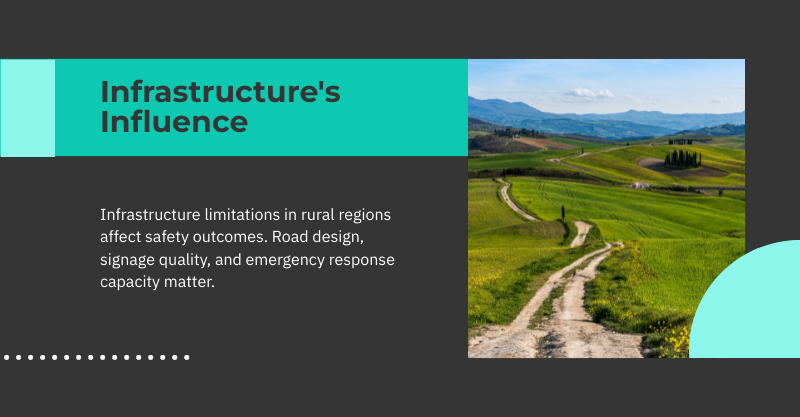
Infrastructure limitations significantly affect safety outcomes in rural or developing regions. Road design, signage quality, and emergency response capacity determine how quickly incidents can be managed.
Common infrastructure challenges include:
- Limited guardrails or barriers on elevated roads
- Inadequate drainage leading to water accumulation
- Poor lighting in rural highways
- Lack of real-time traffic information
- Delayed emergency response times
Fleets operating in these environments must compensate through conservative speed policies and stronger communication systems.
Risk assessment methods used by high-reliability fleet operations
Risk assessment methods allow fleet managers to evaluate routes and operating conditions before deployment. Structured assessment reduces reliance on intuition and ensures consistent decision-making.
A practical risk assessment framework typically evaluates:
- Weather volatility in the operating region
- Terrain difficulty and elevation changes
- Traffic density and accident history
- Availability of alternate routes
- Proximity to repair and emergency services
Risk scoring models allow dispatch teams to classify routes and apply stricter safety controls where needed.
Incident response planning that minimizes operational disruption
Incident response planning reduces downtime and protects drivers when accidents or mechanical failures occur. Preparation ensures that drivers and managers know exactly how to respond.
Effective response plans include:
- Immediate safety procedures for drivers
- Communication checklists for dispatch teams
- Coordination with towing and repair providers
- Documentation requirements for insurance and compliance
- Post-incident review protocols
Rapid response reduces secondary incidents and restores operations more efficiently.
Balancing delivery schedules with safety priorities in high-risk environments
Balancing delivery schedules with safety priorities requires clear policy authority that allows delays when conditions become unsafe. Strict delivery deadlines without safety flexibility increase accident rates and liability exposure.
Organizations that maintain strong safety cultures typically implement:
- Weather delay policies that protect drivers from penalties
- Flexible routing to avoid hazardous corridors
- Realistic scheduling that accounts for slower speeds
- Dispatch authority to suspend operations during severe conditions
Operational discipline ensures that safety decisions are enforced consistently across all routes.
What distinguishes resilient fleets from reactive fleets
Resilient fleets anticipate hazards and adapt operations proactively, while reactive fleets respond only after incidents occur. Preparation, training, and monitoring separate these two operational models.
Resilient fleets typically demonstrate:
- Predictive maintenance and inspection cycles
- Continuous driver training and evaluation
- Real-time operational visibility
- Documented contingency plans
- Leadership support for safety-first decisions
Organizations that invest in resilience reduce long-term costs associated with accidents, downtime, and insurance claims.
People Also Ask
How do fleet managers prepare drivers for extreme weather conditions?
Fleet managers prepare drivers through specialized training, route briefings, and simulation exercises that teach safe braking, hazard recognition, and emergency response procedures. Training tailored to regional risks improves decision-making under pressure.
What is the biggest safety risk for fleets operating in severe weather?
Reduced visibility and loss of traction represent the most significant safety risks because both factors directly affect vehicle control and stopping distance. Drivers must adjust speed and following distance immediately when conditions deteriorate.
Can telematics help improve fleet safety in hazardous regions?
Telematics improves safety by providing real-time location tracking, behavior monitoring, and alerts related to speed, braking, and engine conditions. Immediate visibility allows faster intervention when risks increase.
How often should fleet vehicles be inspected in extreme climates?
Fleet vehicles operating in extreme climates should be inspected more frequently than standard maintenance schedules require, with inspection intervals adjusted based on mileage, temperature exposure, and terrain difficulty.
Why is route planning critical for fleets in high-risk regions?
Route planning is critical because predictable hazards such as flood zones, steep grades, and high-wind corridors can often be avoided or scheduled around. Planning reduces exposure rather than relying solely on driver reaction.
What role does fatigue play in fleet safety incidents?
Fatigue reduces reaction time, impairs judgment, and increases the likelihood of errors, especially in demanding driving conditions that require sustained attention. Structured rest policies help mitigate fatigue-related incidents.
What technologies improve driver awareness during hazardous conditions?
Driver awareness improves with forward-facing cameras, proximity alerts, lane departure warnings, and tire pressure monitoring systems that provide real-time information about vehicle behavior and road conditions.