
A 2026 Buyer’s Guide for Growing Commercial Operations
For commercial fleets operating between 10 and 50 vehicles, technology decisions are no longer optional—they are operational safeguards. At this scale, every incident, insurance claim, driver dispute, or downtime event compounds quickly. What might be a manageable disruption for a very small fleet can escalate into a serious financial and operational liability for a growing operation.
That reality is why fleet GPS management dash cam systems have become a standard component of modern fleet operations in 2026. These systems are no longer viewed as passive recording tools. When combined with GPS tracking, cloud access, engine diagnostics and centralized management, dash cameras become proactive fleet management assets that improve visibility, protect drivers, reduce disputes, ensure proper vehicle maintenance and operation and strengthen long-term risk control.
SafeDrive Dash Cam is designed specifically for this mid-fleet segment. It delivers a commercial-grade dash camera and GPS management solution built for fleets that have outgrown basic setups but do not want the cost, complexity, or overhead of enterprise platforms.
This guide explains what makes a fleet GPS management dash cam a smart investment for fleets with 10 to 50 vehicles, which features matter most at this scale, and how to evaluate long-term operational and financial value.
Why Fleet GPS Dash Cam Management Matters for 10–50 Vehicle Fleets
As fleets grow beyond single-digit vehicle counts, exposure increases in non-linear ways. More drivers mean more routes, more time on the road, and more opportunities for incidents that can affect insurance costs, customer relationships, and internal operations.
Mid-size fleets often face a unique challenge: they are large enough to experience frequent incidents, but not large enough to absorb losses easily.
Fleet GPS management dash cams help close that gap by providing consistent, objective visibility across all vehicles—without requiring enterprise-level telematics or invasive tracking systems.
With the right system in place, fleet owners and managers gain confidence knowing that:
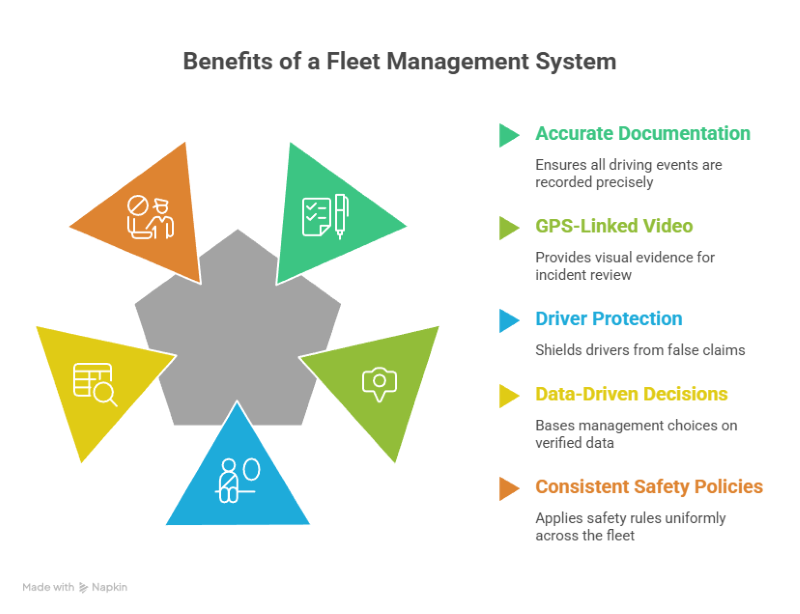
- Driving events are documented accurately and consistently
- Incidents can be reviewed quickly with GPS-linked video evidence
- Drivers are protected from false or exaggerated claims
- Management decisions are based on verified data, not assumptions
- Safety policies can be applied evenly across the fleet
SafeDrive Dash Cam focuses on delivering these outcomes in a practical, scalable way that aligns with real-world fleet operations.
- Solving Real Operational Challenges for 10–50 Vehicle Fleets
A fleet GPS dash cam system should reduce friction—not add new layers of complexity.
For fleets operating 10 to 50 vehicles, SafeDrive Dash Cam addresses some of the most common and costly challenges, including:
- Accidents with disputed or unclear fault
- Third-party claims and customer complaints
- Limited visibility into on-road incidents
- Time-consuming incident investigations
- Inconsistent driver coaching across teams
- Automated diagnostic monitoring; ensuring consistent maintenance and reducing expensive vehicle breakdowns
- Lack of standardized documentation
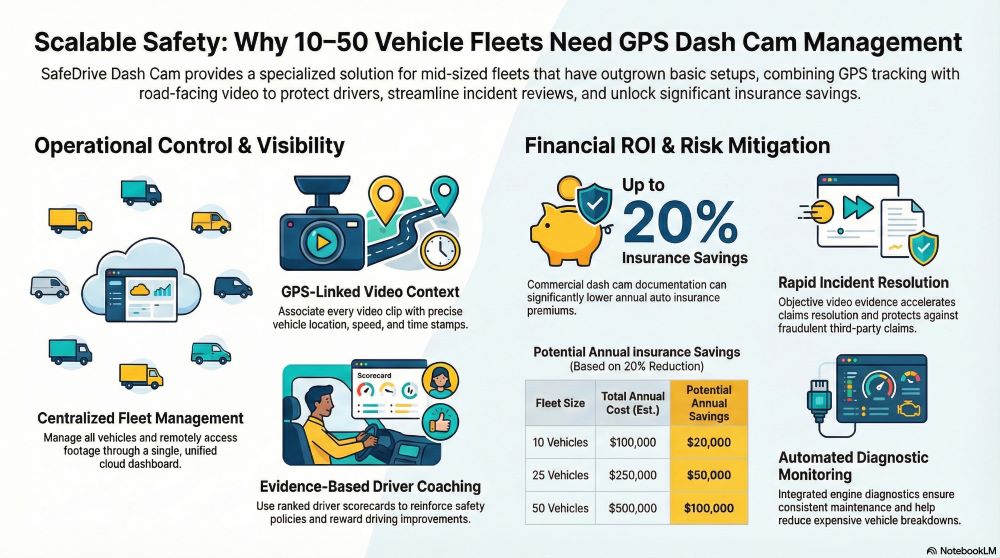
By capturing road-facing video tied to GPS data, fleet managers can quickly review what actually happened during an event instead of relying on conflicting statements. This clarity reduces internal stress, shortens investigation timelines, and improves outcomes with insurers, customers, and legal reviewers.
At this fleet size, the ability to resolve incidents efficiently is not just convenient—it is essential.
- Why Centralized GPS Management Becomes Critical at Scale
Managing dash cams individually may be feasible with a handful of vehicles. Once a fleet grows beyond 10 vehicles, that approach quickly breaks down.
Without centralized GPS management, fleets often face:
- Manual retrieval of footage from multiple vehicles
- Dependence on drivers to report incidents accurately
- Inconsistent file storage and documentation
- Delays during insurance or legal reviews
- Administrative bottlenecks during investigations
SafeDrive Dash Cam eliminates these inefficiencies through a centralized fleet GPS management dashboard. Fleet owners and managers can monitor all vehicles from a single interface, allowing them to:
- Access video footage remotely
- Review incidents across the entire fleet
- Maintain consistent oversight standards
- Respond faster to incidents and claims
- Reduce administrative workload
For fleets with 10–50 vehicles, centralized access is no longer a “nice-to-have”—it is a requirement for operational control.
- How GPS-Linked Video Improves Incident Review and Accountability
Video footage alone tells part of the story. GPS-linked video provides the full context.
SafeDrive Dash Cam systems associate recorded footage with:
- Vehicle location
- Speed at the time of the event
- Date and time stamps
This added layer of data allows fleet managers to understand not only what happened, but exactly where and when it occurred. That context is invaluable during internal reviews, insurance claims, and external disputes.
For mid-size fleets, GPS-linked video strengthens documentation without requiring access to engine diagnostics, fuel data, or advanced telematics. This keeps the system focused, efficient, and easier to deploy across diverse vehicle types.
- Improving Driver Behavior Without Creating a Surveillance Culture
Driver trust becomes increasingly important as fleets grow. Dash cameras should reinforce safety and accountability—not create resentment or micromanagement.
SafeDrive Dash Cam is designed to support evidence-based coaching rather than continuous monitoring. Managers can focus on specific driving events via ranked driver scorecards to guide conversations.
This approach helps fleets:
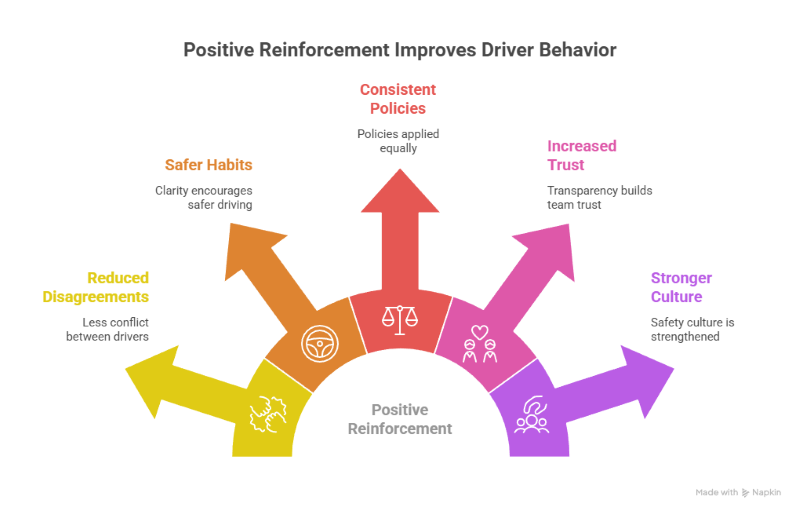
- Reduce disagreements between drivers and management
- Encourage safer driving habits through clarity
- Apply policies consistently across all drivers
- Build transparency and trust within teams
- Strengthen overall safety culture
- Pivots fleet safety to a positive, reward system based on driving score improvement
For fleets operating across multiple crews, routes, or service areas, this balance between oversight, reward and respect is critical to retention and morale.
- Features That Matter Most for 10–50 Vehicle Fleets
Mid-size fleets need reliable functionality—not bloated feature sets that increase cost and complexity.
SafeDrive Dash Cam focuses on core capabilities that deliver immediate, practical value:
- Commercial-grade road-facing dash cameras
- GPS-linked video recording for incident context
- Event-based capture to highlight meaningful driving moments
- Secure cloud access for recorded footage
- Centralized fleet management dashboard
- Scalable deployment as the fleet grows
- U.S.-based onboarding and customer support
This feature mix ensures that fleets can standardize safety and documentation without overwhelming staff or requiring specialized training.
- Operational ROI Beyond Video Visibility
While video evidence is a major benefit, the real return on investment comes from how the system improves day-to-day operations.
For fleets with 10–50 vehicles, SafeDrive Dash Cam helps:
- Reduce time spent investigating incidents
- Shorten claim resolution timelines
- Minimize administrative overhead
- Improve driver accountability at scale
- Reduce overall risk exposure
When managers spend less time chasing information, they can focus more on growth, service quality, and operational efficiency. Over time, these gains compound across the fleet.
- Scalability for Growing and Seasonal Fleets
Many fleets in the 10–50 vehicle range are actively growing—or experience seasonal fluctuations.
SafeDrive Dash Cam is built to scale without disruption. Fleet managers can add vehicles as needed without changing platforms, workflows, or reporting standards.
This scalability ensures:
- Consistent documentation across all vehicles
- Minimal retraining as the fleet expands
- Stable long-term technology investment
- Flexibility for seasonal or project-based growth
For businesses planning ahead, avoiding system replacements saves time, money, and operational risk.
- Long-Term Value of Fleet GPS Dash Cam Management
Over time, fleet GPS dash cam systems evolve into long-term business assets.
Fleets using SafeDrive Dash Cam benefit from:
- Stronger historical documentation
- Easier incident and claim reviews
- Fairer driver coaching and retention
- Reduced operational stress for managers
- Improved long-term risk management
For fleets operating at scale, consistency and control are what separate reactive operations from resilient ones.
Insurance Savings and Financial Impact for Mid-Size Fleets
While operational improvements matter, financial protection remains a primary driver for adoption.
Fleets using commercial dash camera systems may qualify for up to 20% savings on commercial auto insurance premiums, depending on insurer guidelines, driving history, and risk profile.
Dash cameras help insurers assess fleets as lower risk by:
- Providing objective accident evidence
- Reducing fraudulent or disputed claims
- Improving driver accountability
- Accelerating claims resolution
- Video time and date stamp with longitude and latitude; irrefutable evidence of driver innocence
Insurance Savings Examples (10–50 Vehicles)
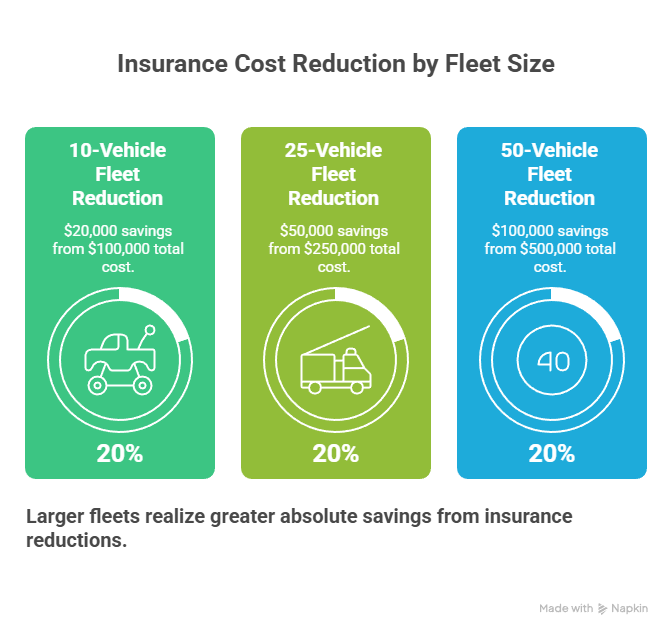
10-Vehicle Fleet
- $10,000 per vehicle annually
- Total insurance cost: $100,000
- Potential 20% reduction: $20,000 savings
25-Vehicle Fleet
- Total insurance cost: $250,000
- Potential 20% reduction: $50,000 savings
50-Vehicle Fleet
- Total insurance cost: $500,000
- Potential 20% reduction: $100,000 savings
Actual savings vary by insurer, region, claims history, and underwriting criteria.
Final Thoughts: Best Fleet GPS Management Dash Cam for 10–50 Vehicles
For fleets operating between 10 and 50 vehicles, technology must deliver clarity, protection, and measurable value—without enterprise complexity and cost.
SafeDrive Dash Cam stands out as a top fleet GPS management dash cam solution because it provides:
- GPS-linked video evidence
- Secure cloud-based footage access
- Centralized fleet oversight
- Scalable, commercial-ready deployment
- Potential insurance savings and long-term risk reduction
For fleet owners who want confidence, control, and operational stability as they grow, SafeDrive Dash Cam offers a practical, future-ready solution.
Frequently Asked Questions
How long is dash cam footage stored in the cloud?
Cloud storage duration depends on the fleet’s plan and retention settings. Most systems store event-based footage for several weeks , up to two months. Older files are automatically overwritten to ensure critical incidents remain accessible when needed. Safe Drive Dashcam’s minimum cloud storage time is three months. However, contact sales if longer cloud storage times are needed.
Can fleet managers access footage without involving drivers?
Yes. Authorized fleet managers can securely access GPS-linked video footage through the centralized dashboard without requiring driver assistance, which speeds up investigations and reduces operational delays.
Does installing dash cams require vehicle downtime?
Installation is typically quick and can often be completed during regular maintenance windows. Most fleets deploy dash cams without taking vehicles out of service for more than an hour.
Can the system support multiple managers or locations?
Yes. Fleet GPS management dashboards can support unlimited users, making it easier for regional managers, safety supervisors, or operations teams to oversee vehicles across different locations.
How do fleet GPS dash cams help construction companies reduce liability?
Fleet GPS dash cams provide time-stamped, GPS-linked video evidence that provides Geofencing to document jobsite activity, travel, road conditions, and incidents. This helps construction companies defend against false claims, clarify fault, protect against equipment site theft, and support insurance investigations.
Are dash cams effective for mixed construction fleets (trucks, vans, heavy-duty vehicles)?
Yes. Commercial fleet GPS dash cam systems are designed to work across varied vehicle types, making them suitable for construction fleets with pickups, box trucks, and service vehicles.
Do dash cams help enforce jobsite and road safety policies?
Yes. Construction managers use event-based footage to reinforce safe driving standards without micromanagement, improving compliance and reducing repeat incidents.
Why are fleet GPS dash cams valuable for HVAC service fleets?
HVAC fleets spend significant time on the road responding to service calls. GPS-linked dash cams help document driving behavior, protect technicians from disputed incidents, and improve response accountability.
Can dash cams help HVAC companies with customer disputes?
Yes. Dash cam footage can confirm arrival times, driving behavior near customer properties, and incident context, helping resolve disputes professionally and fairly.
Do fleet GPS dash cams work well for daily stop-and-go service routes?
Yes. Event-based recording captures meaningful driving moments without requiring constant video review, making them ideal for HVAC fleets with frequent stops.
Are fleet GPS dash cams suitable for medical couriers and healthcare transport vehicles?
Yes. Fleet GPS dash cams provide documentation of transport routes, driving events, and incident timelines, supporting compliance, safety, and accountability in medical logistics.
Do dash cams record patient information?
No. Road-facing fleet dash cams focus on exterior driving conditions and do not capture patient data, helping healthcare fleets maintain HIPAA privacy compliance.
How do dash cams support insurance and risk management for medical fleets?
GPS-linked video helps validate incidents, reduce disputed claims, and demonstrate proactive safety practices to insurers.
How do dash cams benefit electricians and skilled trades fleets?
Fleet GPS dash cams help protect trade professionals who drive daily between job sites by providing objective evidence during accidents, disputes, or insurance claims.
Can fleet managers review incidents without interrupting technicians?
Yes. Centralized cloud access allows managers to review footage independently, minimizing downtime and distractions for field teams.
Do fleet GPS dash cams help with delivery accountability?
Yes. Dash cams confirm driving behavior, delivery routes, and incident timing, supporting accountability and customer service quality.
Are dash cams useful for refrigerated or time-sensitive deliveries?
Yes. Cargo temperature can be tracked through the Dashcam. While GPS-linked footage documents delays, road hazards, or accidents that affect delivery timelines.
How do fleet GPS dash cams support insurance underwriting decisions?
Insurers view fleets using dash cams as lower risk due to improved documentation, faster claims resolution, and reduced fraud exposure.
Can fleet GPS dash cams scale across multiple locations or divisions?
Yes. Centralized dashboards allow multi-location fleets to manage vehicles, users, and footage under a single platform.
Are fleet dash cams considered telematics systems?
Yes. Fleet GPS dash cams offer enhanced telematics by combining it with video and location context, engine diagnostics, making them streamlined and more cost-effective than cumbersome enterprise platforms.
Ready to Manage Your Fleet with Confidence?
SafeDrive Dash Cam helps growing commercial fleets gain visibility, protect drivers, and reduce operational risk with a scalable GPS-enabled dash cam solution built for real-world fleet operations.
If you manage commercial vehicles across construction, HVAC, delivery, medical transport, buses, agriculture, or food distribution, our team can help you determine the right setup for your fleet—without unnecessary complexity.
📞 Call: (877) 234-8383
📧 Email: info@safedrivedashcam.com
Get straightforward guidance and see if SafeDrive Dash Cam is the right fit for your fleet.